All posts by Marco Steinberg

In 2008 Sitra set out to build a strategic design capability. The innovation challenge at the core of its mission required the ability to design and deliver integrated solutions. Since its inception the team at Sitra has been pioneering the notion of design applied to shape the public sector.
For the past four years we've been working to develop experimental projects, as well as research, reflect upon, and articulate the practice of strategic design. In that time "strategic design" has gone from being obscure to resonating with many. Today I am writing this letter to explain why Helsinki Design Lab will close in June and what you can expect from us in the meantime.
Since its inception in 1967, Sitra has been evolving. Within the latest transition, design at Sitra is shifting from a strategic to a service role. The current members of the design team (Bryan, Justin, and myself) are committed to strategic design and will therefore pursue this interest beyond Sitra. In the spring Sitra will hire for a new role to grow service design within the organization.
One of the first things we did in building HDL in 2008 was to dig into the archives from the sixties to be inspired by the legacy of the Industrial, Environmental and Product Design conference that Sitra sponsored (HDL 1968). During the next seven months we will be converting this site into an archive of the most recent phase of HDL. The archive will be legible, free, and open.
Our intention is that the work and experience of Helsinki Design Lab be useful not just for the next phase of design at Sitra, but for the community as well—that’s you. Our model for the HDL archives will be a seed bank. We hope that you are able to take the seeds of our work forward to find new contexts and new uses.
The first thing we will do is compile our case study research from Helsinki Design Lab 2012 into a forthcoming publication on stewardship. Our tentative publication date is May 2013.
Second, we will be hosting a public event in Helsinki on June 10th, 2013. This is a true experiment, as we’ve always done smaller gatherings. If you are interested in joining us this summer please add your name to this list so that we can be in touch as plans develop. The event will be free to attend, but you’ll have to cover your own expenses.
Our objective is to provide a platform for the strategic design community to share experiences, and we’re particularly interested in design as a driver for innovation in the public sector. We will focus on three specific audiences:
- Educators: how do we educate strategic designers?
- Practitioners: how do we increase the supply of practices capable of providing strategic design services?
- Commissioners: how can governments and foundations commission strategic design?
These themes are drawn from the questions and inquiries we have fielded over the years. During April and May of this year we intend to be on the road, meeting with you, giving public talks, hosting workshops, and making ourselves available to share the work of HDL. If you are interested in hosting us, please send a note here. Our resources are limited, but we will use your feedback to craft our itinerary.
We are also interested in the questions that you may have about HDL, our projects, and/or strategic design. If we get a critical mass of questions, we'll construct an extended FAQ. Your contributions are essential for this. Please visit this page to leave your feedback.
From July 1, 2013 the HDL website will go into hibernation mode. All of the content will remain available but weeknotes will cease and there will not be anyone responding to emails.
Undoubtedly this will be a surprise to some, but rest assured that the team is as committed as ever and we're looking forward to a very busy next few months. To some, closing may be interpreted as failure, but to us it's the realization that HDL has accomplished what it set out to do: to demonstrate that design can play a valuable part of strategic decision making, to grow a community around this practice, and to advance the discourse. As all good undertakings come to an end, they invariably make room for newer and better things. The next steps we all take together.
Sincerely,


Note: This is cross-posted from Insidejob.fi since it's relevant to readers of the HDL blog too.
Our Design Exchange Programme is growing again. In August we placed Jaana Hyvärinen to work with the City of Helsinki Department of Social Services, where she will focus on integrating service design into the organization’s strategy. While the public sector is improving its service design capability, we also need to build organizations capable of framing relevant questions in the first place. No one wants a fantastically delivered service for something useless, or even harmful. How about the best surgery for those who don’t need it? So this is a wordy way of saying that we see service design as one part of a compliment of approaches to bring coherence to what we say, what we do, and how we do it.
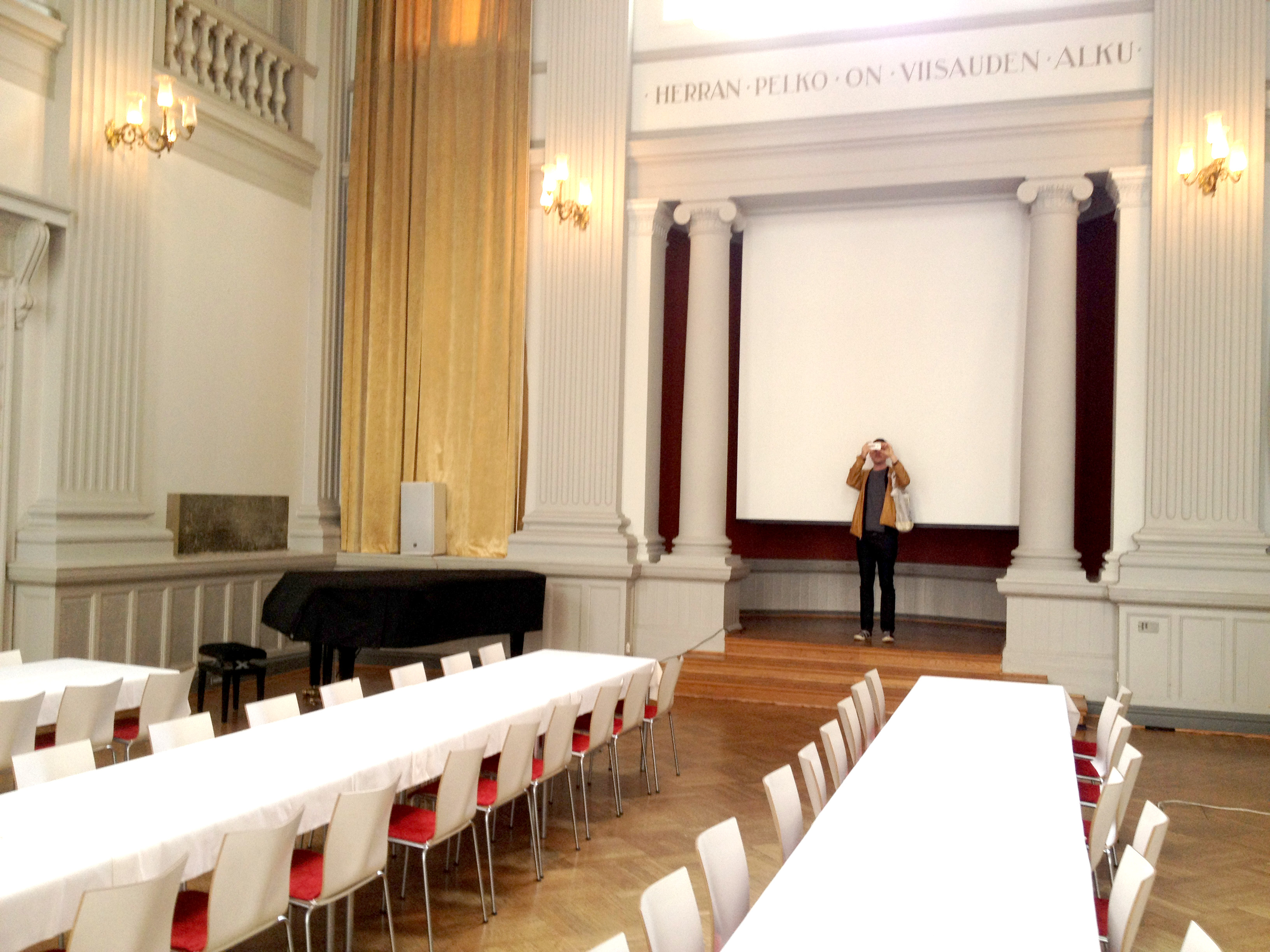
Bryan standing below the Finnish saying “Fear of God is the beginning of wisdom”. DEP is as much about entrepreneurship as it is about culture. Can we build a culture that stems from trust instead of from fear?
Our societies have built great innovation traditions in the private sector, but that entrepreneurship can still be dormant in the public sector. While Helsinki Design Lab is about knowledge creation, capture, and dissemination, DEP was conceived to build capability within the public sector in Finland. Sitra's design-related work balance two sides of the same effort. We reflect on the knowledge and craft of strategic design through HDL, and build practical capabilities through programs like DEP. Public sector entrepreneurship requires both.
We're excited to announce that we now have two more openings for public sector designers, this time working within two Finnish Ministries. One position is open within the Ministry of Employment and the Economy (TEM) and the other within the Ministry of the Environment (YM). Applications for these these one-year positions are closing soon, so take a look at our job posting if you are interested. Please also help us spread the word!
This round of hires will bring our DEP total to four placements. Our gamble was that DEP would be a great learning experience for our embedded designers, for the hosting Public Sector organizations who gain a new capability, and us who get to learn first hand from this experiment. Early indications are positive and we will undoubtedly be examining the questions of whether to build DEP into something beyond this first pilot year.
Back in the office after 4 days in Hong Kong and Shanghai where I reconnected with many of the local developments with an eye towards its impact on our work at Sitra. By now everyone is quite familiar with the Chinese scale of development but what really caught my eye was how they're doing it, and the numbers behind it. In Shanghai I discussed the sustainability challenge with Prof. Wu, Vice President of Tongji University, comparing the US and the Chinese context and model.
Here's an interesting fact that Prof. Wu was quick to point out: China has 1/6th the developable land the US has, but 4 times the population. This is a factor of 24, meaning that China has to be 24 times more efficient just to meet the US (which is far from the golden standard in sustainability!). So the question in China is not about copying, but rather of redesigning the model, something that is at the heart of what we do.
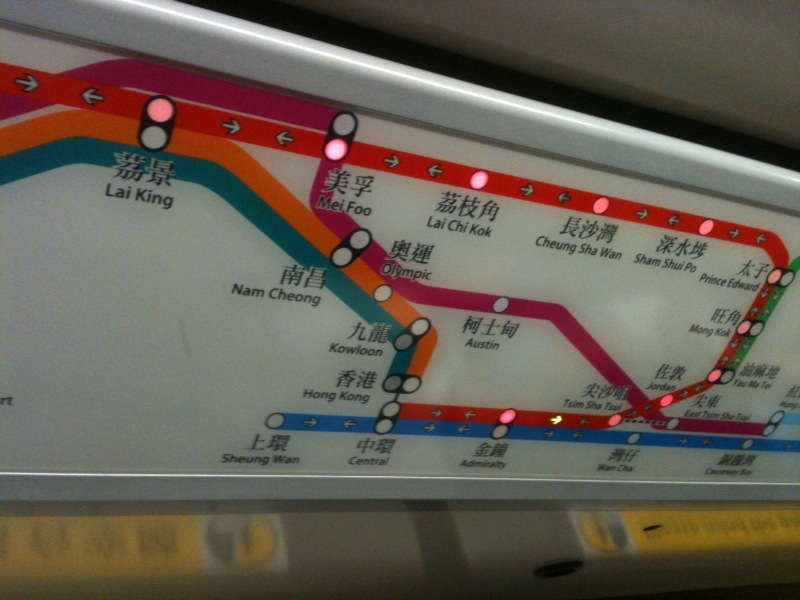
The other discussion thread that sparked my interest was the fact that the Chinese were quick to distinguish that their politicians are “selected rather than elected”. This is an interesting distinction, making the public sector more akin to business than the European model.
The CEO—so to speak—is selected by the Board of Directors rather than elected by its employees. And in this sense the public sector is more businesslike in its willingness to experiment and R&D solutions. Clearly there are both upsides and downsides to the two political models, but what makes the Chinese context interesting is the coupling of a grand redesign challenge with a system that is more attuned to risk-taking.
In Finland we have a public sector which is highly developed, but our challenge today lies in our ability to move into uncharted territory, rather than improve the existing. How else will our aging society be able to meet growing service needs with a diminishing tax base? How will we meet our sustainability challenge within an energy and resource dependent economy? These are not efficiency challenges, but rather redesign challenges.
And like China, we will have to clarify our attitude towards risk. Doing new things has an associated risk, but doing nothing is arguably much riskier. So what is Finland’s new relationship to risk?
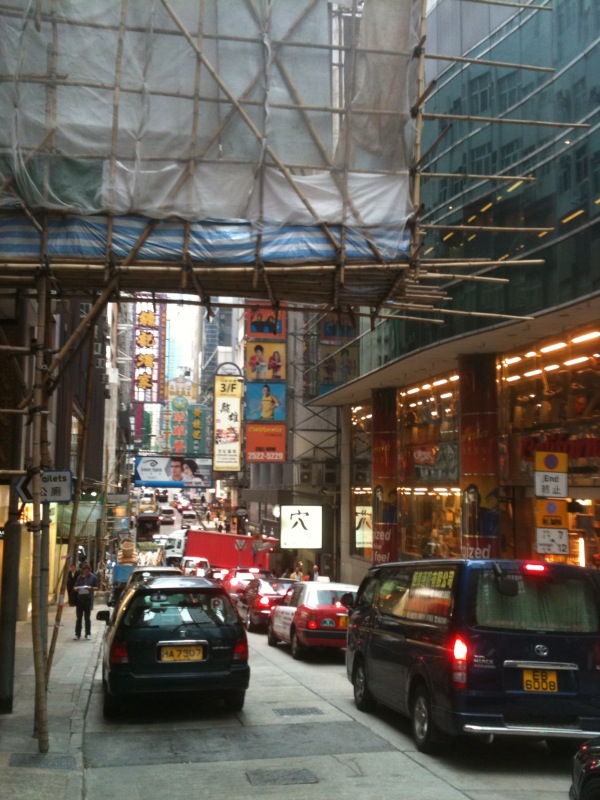
On the busy streets of Hong Kong
In Shanghai I met up with local practitioners too, to complement the “top down” discussion with a grassroots picture from the ground. One of the highlights was to reconnect with Bill Yen, who is doing great at his RMT practice. The practice field is charged with a passion to do, achieve, and redefine… something which is quickly becoming a rarity in our corner of the world.
While elusive at times, “passion” is something at the core of the European innovation challenge. In this sense while I have my own issues with the recent elections in Finland, it has helped inject a moderate measure of passion into our society. Let’s see if we can maintain an upwardly trend on this.
In Hong Kong, I visited the offices of OMA and was generously hosted by David and Betty. We discussed the changing nature of their practice and a continuing shift from designing buildings to redesigning opportunities. Of particular interest is their recent work with the local metro authority, which involves rethinking the idea of efficiency (how could you otherwise improve one of the world’s most efficient subway systems? A task they were asked to do).
My last anecdotes come for the Design in Education conference that I attended while in Hong Kong. Thank you Lorraine Justice and Ken Friedman for leading on this critical issue! While stimulating overall, my take-away from the event was that there is a very, very broad spread on the definition of design and design research within the academe. It made me wonder if one can even draw a boundary on the design community.
But perhaps the leading question conveniently boiled down to yet another number: it costs society on average $500,000 to educate a PhD in Design. How do we define the return-on-investment discussion on that investment?
As we've just finished the third and final day of HDL Global 2010, I thought it would be nice to share the welcome letter that set the course for the last three days of conversation since it also defines the underpinnings of our work at HDL.
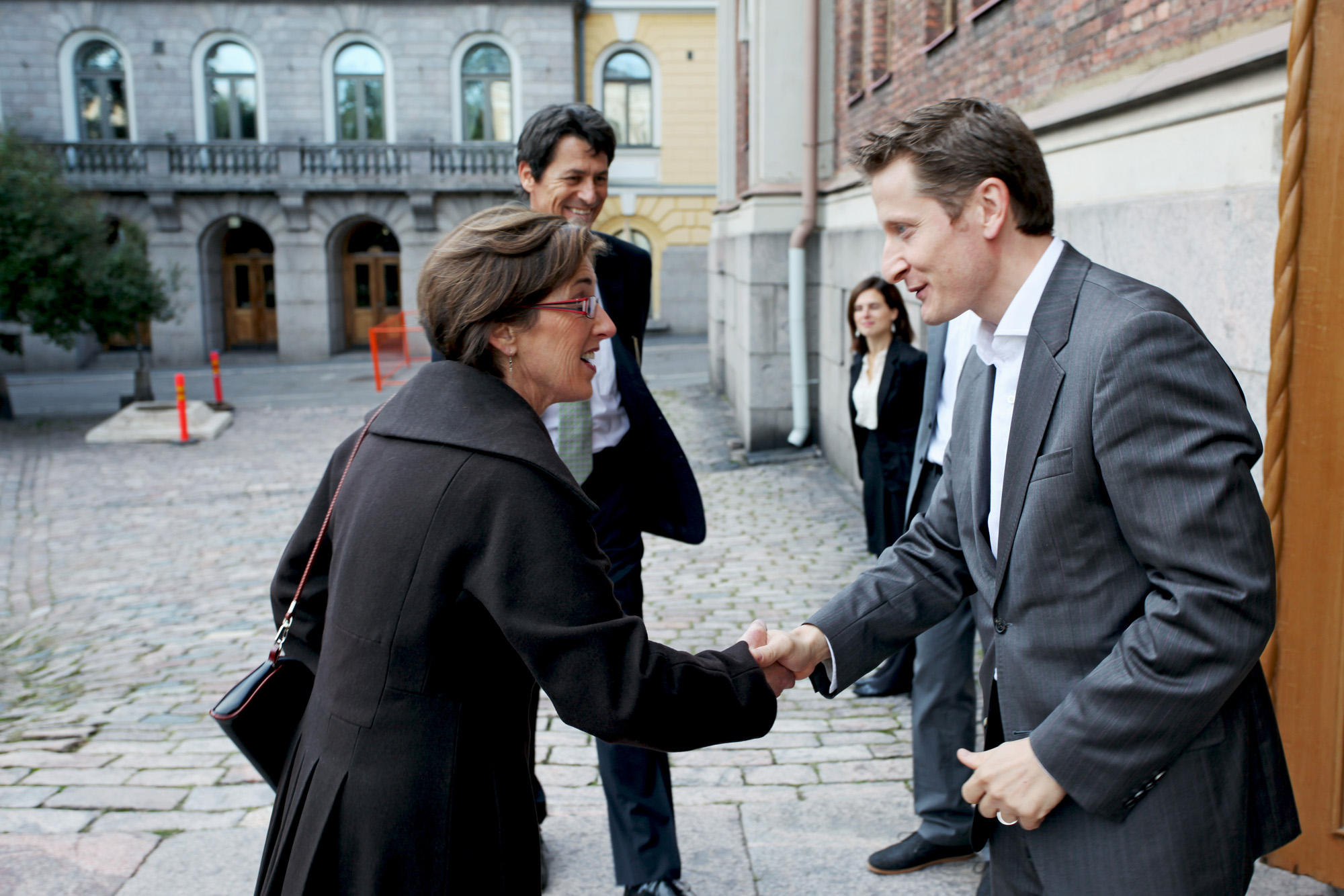
Welcoming participants on day one of HDL Global. Photo: Pekka Mustonen
We find ourselves at a critical crossroads. Large scale challenges such as climate change, healthcare, and ageing demographics—just to mention a few—are eroding the foundation on which our societies have been built. While the world is thriving with knowledge, innovations, and good will, there is little positive sum progress at this scale, on these fronts.
Our fundamental problem is that we are organized for an 18th century world, facing 21st century problems. Our academies of learning, our governmental structures, and our professions are siloed by boundaries that do not match the needs of the world we live in.
So what is unique about today’s challenges? They fall at the intersection of what we know; they have multiple owners; they are riddled with legacy issues; they are of a scale that transcends normal innovation challenges; and they are continually evolving. While traditional models of innovation and design have focused on optimizing individual parts, we have not been able to transition our capabilities to address the “architecture of the problem.” Big picture dynamics will govern our future, this is where we need to work urgently.
It’s where there’s a new role for design to help shape strategic decisions, beyond its traditional role giving form to products.
But why are we meeting in Finland? It’s simple: as Finland goes, so goes the world. When it comes to 21st century challenges, Finland has the right scale and ecosystem to be an innovation engine. Where competiveness in the past might have been defined by terms of scale and economic might, today being small and well integrated is a new competitive advantage. But we can’t limit ourselves to our national boundaries. Rather, we need to leverage all of the great pockets of innovation around the globe to think of Finland as a platform for innovation at a systemic level.
The other asset we bring is Sitra, The Finnish Innovation Fund, an independent fund that reports to parliament. While governments face tremendous redesign challenges, there is no commercial consultancy model for this work. There is no line item within government agencies for redesign, nor is there generally a readymade “client.” To be truly effective, design is not something that can happen to government, it must happen within government through the creation of educated clients and new collaborative approaches. Sitra’s financial and political independence enables it to help de-risk this development.
By joining us we hope you become part of a growing community that believes in the ability to develop new approaches to today’s systemic challenges. To collectively redesign our future is something that can only happen with the help of people like yourself. Together we are building a global community that is united by this common mission.
Whew! What a week. I just got back from Abu Dhabi (which brings with it a weather swing of 50 degrees!), where I was a speaker at the World Future Energy Summit, talking about Sitra's Low2No approach to sustainable development. We will post my talk & presentation as soon as it’s available from the WFES website.
It’s been an interesting two days meeting people and connecting thoughts & opportunities. In the context of what is happening here at Masdar, Low2No is an interesting, globally relevant, alternative strategic approach to meeting the sustainability challenge in the built environment. Masdar is undoubtedly a great global experiment creating a carbon neutral city solution from scratch. Low2No addresses the other challenge: how to do it in a legacy-ridden market such as Europe? Not only do we need to better understand what a sustainable city model is but in Helsinki, and Europe generally, we need to understand how to transition from the current legacy system (infrastructure, political, financial, cultural) to a sustainable solution. It’s not only about what that “it” is but, most importantly, how to get there.
Events like the World Future Energy Summit are of interest as they help create a community around strategic issues, bringing many stakeholders together. On a practical level I had some great meetings, many of whom I’ve been connecting with virtually and now they've finally materialized in person.
Yesterday I had a nice chat with Dan Kammen. We shared notes on what we are doing and rekindled our conversation which began a year ago with Low2No. Also met Khaled Awad briefly- was good to finally connect with one of the driving forces behind Masdar. Lastly, but not least, it was a real pleasure to spend some quality time with Peter Sharratt. Trained as an architect, frustrated with the object obsession the profession has developed, now working in the strategic systems/decision making space… he gets it! He is also very insightful about the global opportunities of the Masdar model. Look forward to seeing him in London soon and continuing our partnership around Low2No.
On a more cursory note: my stay in Abu Dhabi was a bit brief, but it's always exciting to be in a new culture/country. There is a real underlying beauty to this place that is challenged by a new physical and cultural layer that has been built in minutes. The challenge here seems to be how to build a future without losing track of the rich heritage and culture that is embedded here. We are talking about finding a balance between the 10 years of new, versus the thousands of years of old.
Aside from the summit, business continues as the usual whirlwind of activities. Had great talk with Darrel Rhea, a friend who is acting as an advisor to HDL, reviewing what we are working on. Hanna was looking at storefront spaces in the city for one of our HDL experiments, Minna was researching catering and cost cuts in the City of Helsinki (interesting combination but they're separate issues), Bryan visited TEM, and with the time difference Justin is working with Adriel and Ezra on the Challenge Briefings at this very moment. We're working on securing our keynote speakers for September as well as a few very busy guests. And…. our team just expanded: we are joined by the talents of Seungho Lee, Masters student at the School of Art and Design (now part of Aalto University). From Korea, to Helsinki, to HDL. Welcome aboard!
I’m on my way to a meeting, so forgive me for the haste with which I jot down the start of an idea (I’ll expand later, but this is too important to start later).

We had an inspirational morning in Bangalore today. One of them was with Poonam Bir Kasturi and her team at the Daily Dump project. This is an amazing project driven by a critical issue: Sustainability. While the term is growing with “cult-like” popularity, most of the airtime being given is from a 30,000 feet perspective. Poonam’s team is deeply rooted in the complexity of the problem as it confronts daily life. The focus is on waste, tackling it from a composting perspective through a systematic design approach that is rooted in meaning, culture and economic realities. This is not a “deep dive” into the problem, but rather a powerful example of how design is being applied to create real social innovation by re-designing its value chain (sorry, I hate this business term, but you get what I mean).
Over a wonderful lunch, we discussed many issues primarily focusing on design innovation, the team’s “subversive” way of redefining problem boundaries, and culture…. seems like our discussions, almost without exception, end with the question of culture.
I have many thoughts racing through my mind as I realize my growing skepticism for what I would call “board room innovation”. Back on this topic and Poonam’s work shortly…
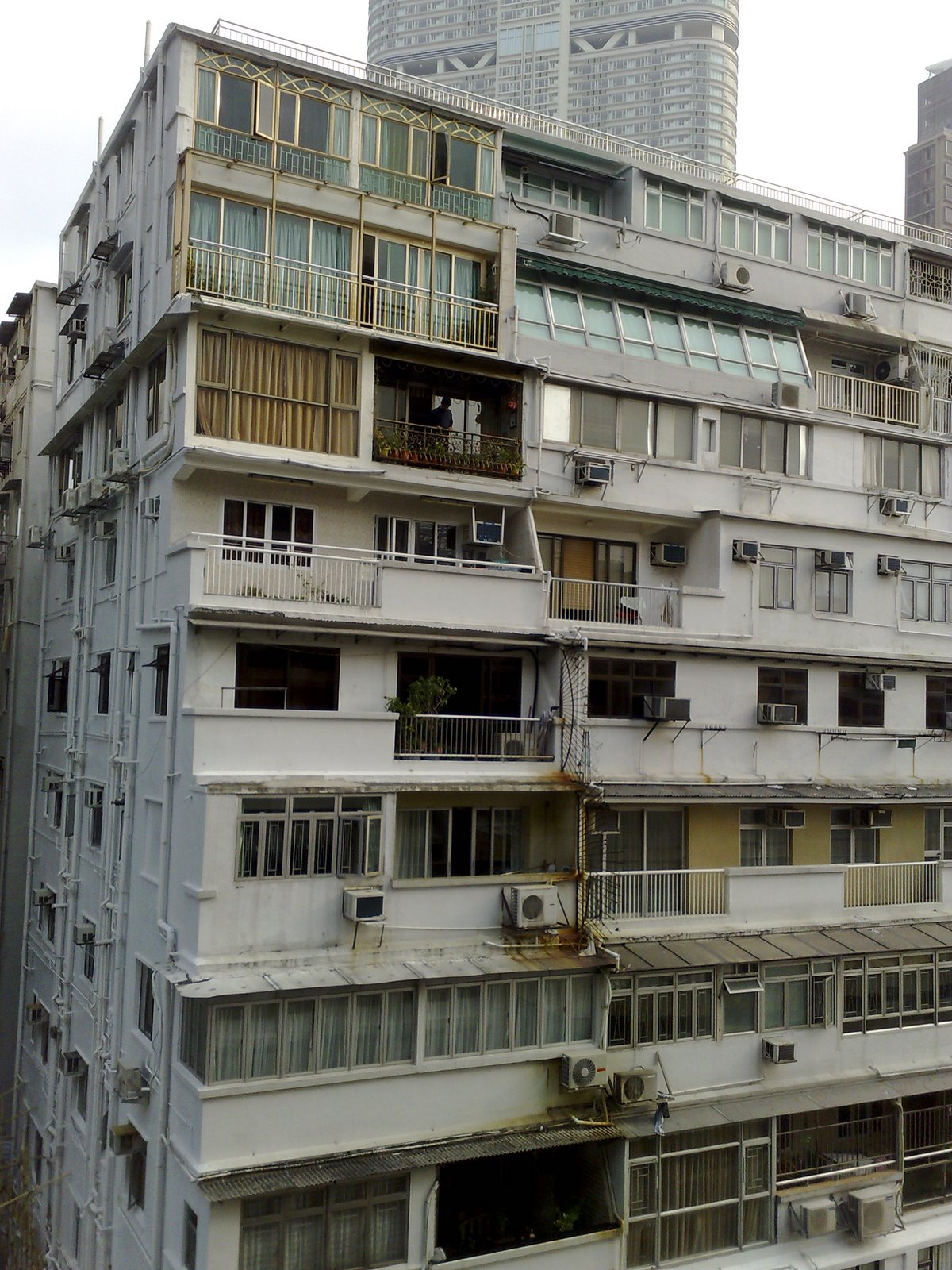
Hong Kong is a great window onto the future…..and yesterday we caught a glimpse of it courtesy of Lorraine Justice, Martin Smith, and Babette Strausse. As Bryan mentioned one of the topics we converged on was Design Education. I think that at the end of the day, design’s greatest value proposition is in its education.
It has always been with great dismay that I have had to acknowledge how little we invest in the art of teaching this most valuable asset. My first experience teaching (which is just about universal with anyone who has taught) is that I was simply thrown into the classroom and expected to swim. After all if one designs, one must know how to teach it, right? Well, try again… not really (actually far from it)….. So it was wonderfully refreshing to hear Lorraine and Marty talk about their investment into the art of teaching (take a look at the Design School’s Education program- I think this is very visionary work). And Lorraine, you have to write about your insights on this topic!
But how much of an audience is there for design education? Well we have the professions we serve, the growing businesses community that is awakening to design.…. and more fundamentally, a growing base of decision makers who need better strategic tools to confront an ever growing complex world. This is all on top of an exploding developing market of design education. Lorraine spoke with great clarity and vision about our changing global landscape, and the reality is shocking. Here’s a fact I’ll leave unanswered: guess how many new design schools are emerging in China? And it does not end there…. the thirst for the innovation process called design is insatiable, and well… you can see how that puts a critical lens on the design question of “how do we prepare those who teach design to be effective?”
Our education discussion posed another interesting question (its late so I’ll leave this one unanswered too): given the same innovation process, will all cultures innovate the same way? What kinds of cultures will spur what kind of innovation?
I think the challenge for countries that are homogenous, obedient, consensus driven, highly structured, and/or risk adverse (this describes Finland in many ways) is that the environment may color the kind of innovation that can be leveraged. A process alone is not enough. China’s culture will shape the kind of innovation it will prepare its students for… my guess would be that it will prepare great incremental innovators, but will have a hard time with those innovations that need a higher level of re-thinking, critique, and counter-culture perspective. Finland too, will have an innovation challenge. While it has the right ecosystem for innovation, its challenge will be to create the right conditions for thinking differently in a consensus driven culture.
One of the things I did today was spent some real quality time with Jan Wahlberg, Minister Counsellor at the Finnish Embassy in Tokyo discussing Japan, its culture, and questions of design and national competitiveness. Despite being in a world of new characters, I’m surprised by how accessible Tokyo is.
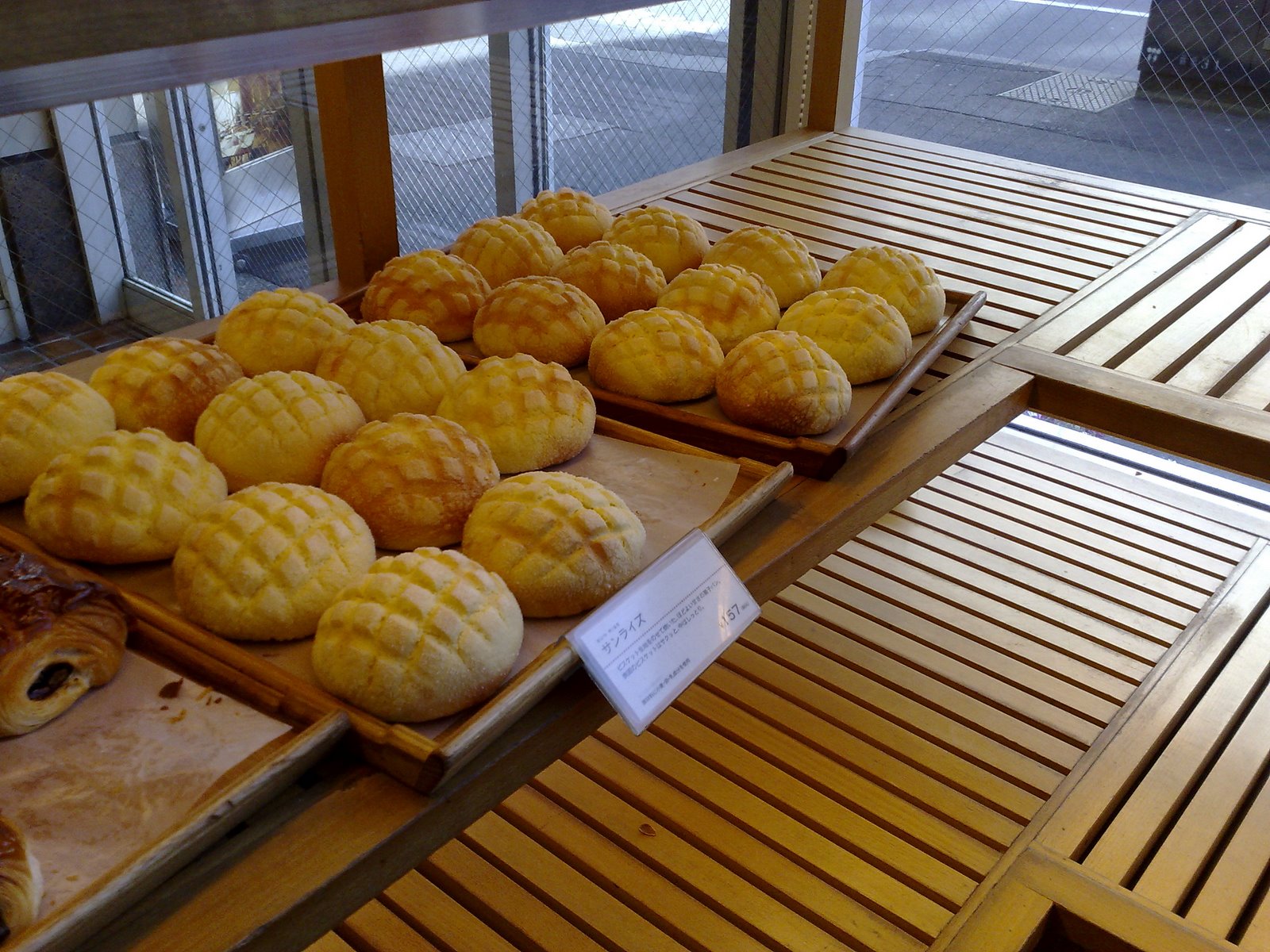
Mmm. Breakfast.
There are few cultures that have engrained design as deeply and to such a high degree than the Japanese. It’s hard not to notice that everything you touch and see has been carefully planned and developed: shapes; colors; packaging; food; buttons; gadgets; signs; and tickets. And it does not stop there, rather it permeates to all aspects of culture and behavior. There is an astounding sense of coherence, of one voice. It would be simplistic to suggest that the Japanese are somehow born with a more acute sense of the aesthetic; that they possess a unique “design” gene. Rather, this coherence and refinement is a reflection of its culture.
Finland is not dissimilar in certain regards, especially when it comes to the “one voice”. Finland is a small country (this -actually- being the biggest difference with Japan), with a high degree of literacy, and a very homogenous culture. Decision making in this context is, relatively speaking, easy. I think this is something that we will want to leverage at our next Helsinki Design Lab. It will enable us to prototype ideas that require systemic change.
But I’m also wondering how much of a liability can this “one voice” be. In this context there tends to be less need for discussion; fewer points of contention; less angles on an issue… so the danger is that rather than expand, the collective understanding contracts. This in turn may limit the ability to find the space for innovation, to think and see differently. So how does a national innovation strategy in a “one voice” context differ from that in other contexts?
What is a Milan tram doing in San Francisco? Well the simple answer is that they bought & brought it over. But the more fundamental question is one of identity: how could such an iconic American city have such an iconic Italian tram? Can two distinct national identities coexist?
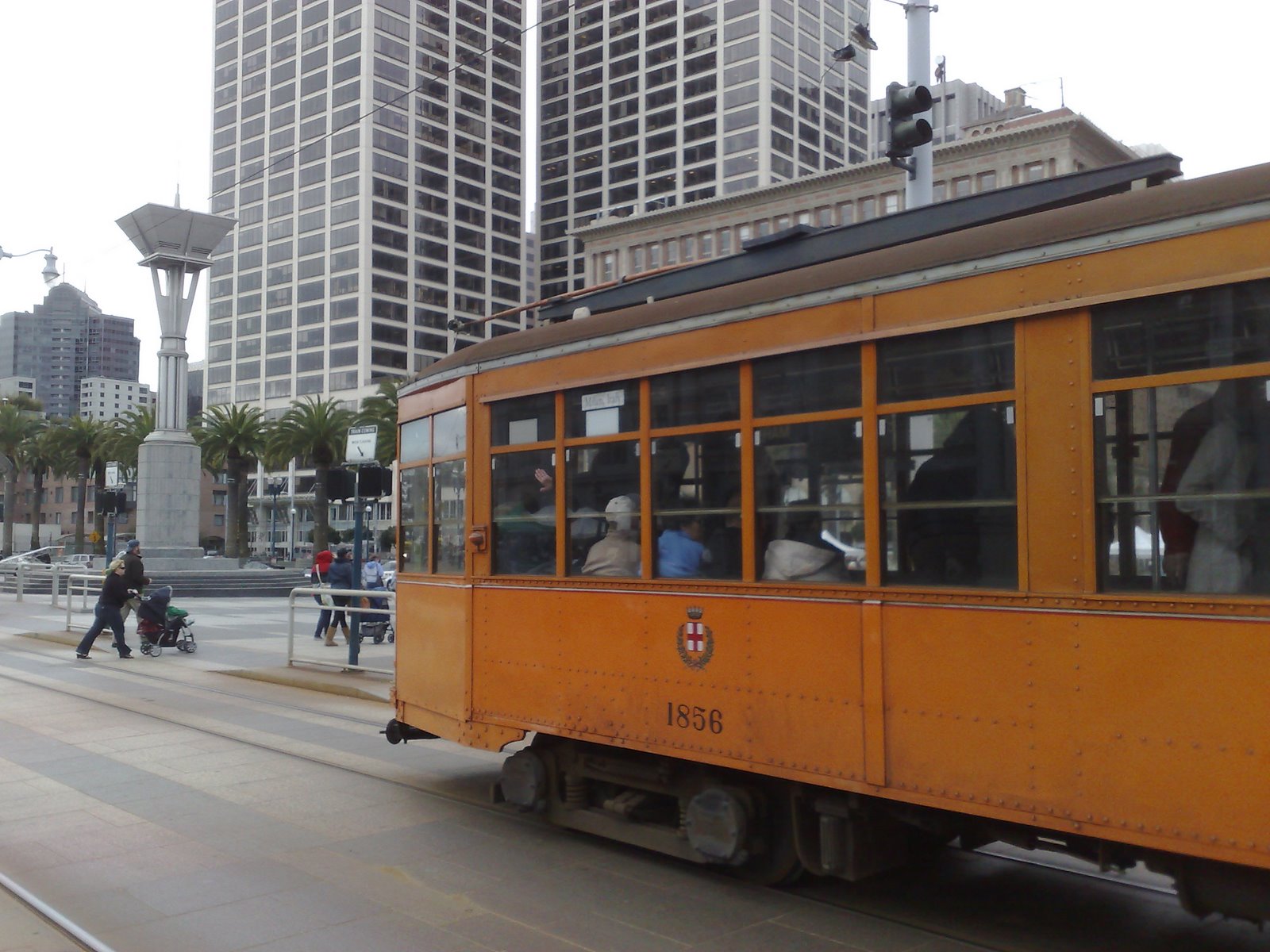
One way design has been leveraged is as a differentiating tool. First to shape products, then to shape brands, and - in the best cases - ultimately leveraged to shape national identities. We do have, after all, distinct expectation about German, Italian or Scandinavian design. Each one conjures up a specific value system, a way of living… an ideology. I have friends from all corners of the world who have a more “Italian” temperament, or a more “Scandinavian” attitude.
Today, ideas, people, and opportunities move and mix at unprecedented rates. In this global world San Francisco may more in common with Milan than it has with Nebraska or rural West Virginia. As I prepare to head out to Tokyo today I am left wondering if the differences in the world outweigh their similarities. Will national boundaries continue to define the boundaries of competiveness? If not, what is the role of national innovation policies and of design as “differentiator”?
Innovation during these hard economic times is not for the weak. Sure, it has become a popular term, but few understand it better than Darrel Rhea, CEO of Cheskin. For one simple reason: Darrel does not just talk and sell innovation, he actually walks the talk. He actually knows how to innovate, and he has a track record that would make most of our jaws drop. But what does “innovation” look like during these hard times?

Darrel and I spent the afternoon today in San Francisco, talking about design and the changing “innovation” landscape. It’s clear that companies are panicking, and with panic comes a nervousness and antsyness for immediate results. The appetite for the upfront investment, and the calm and focused mindset necessary to carry it out… well that seems to be all but gone. I think we should hand over our businesses to firemen. I’ve never seen anyone more calm and collected, than a fireman dealing with an emergency. Staying focused helps you make better decisions. Isn’t innovation about getting you to a better place? About making better decision? While I understand that companies are scrambling for cash, it seems foolish that they jettison their calm during the time that they need it the most.
So what will be the effect of the stimulus package on innovation? While undoubtedly it will help stimulate opportunities we also need to be mindful not to throw too much and expect that it will resolve our problems. In some places cash helps, in others it’s like fuel to a fire. There is no better way to kill early innovations than by throwing too much at it. What works in a small, informal setting will get obliterated when expectations grow too fast and too much; when there is more organization that content. It’s like overwatering a seedling. I’m starting to think that the stimulus package really needs a designer…..
On Tuesday, Obama spoke about the budget. He outlined its central role in redefining areas critical for the US’s future competitiveness: Education; Healthcare; and Energy. While these issue all have tangible, measurable daily meaning to us, the term “budget” is rather abstract. A budget is no more than the overall organization of expenditure, or is it?

Today I met with David of the Institute for Responsible Investment and we had a very interesting discussion. I find it fascinating to delve into the intersection between financial issues and social values. In addition to the traditional argument of competitiveness, Obama’s speech had strong threads regarding the need to “do good”. But what is – in a broader sense- the connection between expenditure and social good? How can we see that these resources are organized, injected, and accounted for in ways that help promote broader social values? How does a corporation that wants to “do good” in terms of sustainability see and measure its ROI in these terms? These are multidimensional, complex issues that will require synthesis.
In all of this the question of how, and what, you measure will be critical. What will our “next generation” indicators look like? I think design has a role in shaping many of these questions.
Today I spent time with the research team at the Helen Hamlyn Centre in London. Stunning work looking at applying design to bring innovation in healthcare (one of many areas of focus): Maya gave us an overview of their low cost disposable surgical tools; Johnny talked about their resus-station; Sally showed the graphic design of injectable medicines; Rob walked me through their Smartpods. All stellar work, well worth a study!
While the tangible outputs of their work were great design solutions, the real jewel is the process. Much of our discussion focused on an innovation cycle that does not stop at concepts, but pushes it beyond to implementation. When we talk about healthcare getting all the right stakeholders, identifying key champions, finding the right funding (money, after all, does not come without strings attached!), framing the problem productively, keeping focus, having the right stewardship…. well, it’s not easy. And it does not happen overnight. But this is a design process that enables the design solution to shine.
The great challenge today is not so much great ideas, but implementing great ideas. In an age where risk is a risky proposition, being able to demonstrate that a new way of framing problems (through design) leads to better solutions is critical. But without an innovation process that spans the continuum of inception to implementation it’s hard to make the ROI argument…. because there is no return!
Design is perhaps best described as “pattern recognition”. Today I met with Zary and his colleagues at Wireless@KTH in Stockholm. At lunch we talked about the barriers to innovation in the wireless sector and suddenly I caught onto a pattern. Many design communities define the “consumer” differently as they have diverse cycles of innovation… it’s not rocket science, but sometimes it’s the small revelations that help make our world a little more coherent.
The “consumer” question gets a different answer depending on who you ask. In the product world you do consumer research, figure out what people want, and then design for that need. In architecture, who knows who the consumer will be 50 years from now? And if it’s a public building, by nature it defies any single profile but rather must be inclusive of anyone and anything. These two design communities, while related, have fundamental difference. Same goes with device and infrastructure communities in the wireless sector. The device world is consumer focused, churning products on a quarterly rate; the infrastructure world on a 50 year trajectory providing needs that have yet to be defined. But what happens when consumer services require both aspects to be coordinated & integrated?
What happens when the appliance providers need to work with the architecture providers to create a sustainable living solution?
Off to London now, were I look forward to meeting up with Rama and his colleagues. Nothing like good people over a good meal!
In a few days we’re starting the Almost Grand Tour of 10 cities in 10 days to reconnect with some familiar faces from Helsinki Design Lab 2008 and make some new friends too. This is one of many ways for us to start developing HDL 2010. We’re thinking of Helsinki Design Lab 2010 as a crucible for strategic design on the global scale, so what better way to start than to visit designers around the planet and see what they’re up to?
My travels will take me to Stockholm, London, Boston, San Francisco, Tokyo, Singapore, Hong Kong, Bangalore, and back to Helsinki. Along with my colleagues Bryan, Minna, and Pia (who are each joining me on various stops) we’ll be updating this blog daily with some reflections on the trip and the people we meet.
Helsinki Design Lab 2010 is still a ways off, but we’re getting started early and thought that some of you may want to get a peek into organizing a global event like this. Where better to start than introducing ourselves?
I joined Sitra, The Finnish Innovation Fund, as Director of Strategic Design last August. For the past 10 years I’ve also been an Associate Professor at the Harvard Design School, where I am currently on leave. While at Harvard my work focused on healthcare system design and sustainability issues for small and medium-sized enterprises .
Here at Sitra I head the Strategic Design & Networks team. While I was adamant about adopting the term “strategic design” I also recognize the potential downside to this word combo… design means everything and nothing. And strategy… well that seems to color everything worthy of attention these days! Putting linguistics aside, I think strategic design is important because it describes what we do (I hope!) and it reframes the word “design” in a more competitive context, which is critical if design is to be understood as a valuable asset. If you’re reading this blog, chances are you already value design as a way of thinking. At Sitra I’m working to make sure that designers have not only the interest in involving themselves with strategic decision making, but also the opportunity.
But why the term “Strategic Design,” you may ask? Design requires the integration of multiple deep knowledge sets; visualization of complex multidimensional problems; and the ability to synthesize conflicting views, data points, and opinions in hopes of developing a holistic understanding so that we can create better and more complete answers to our problems. Traditionally design has been used to help shape better objects (a phone, cup, car). At Sitra my team is using design to help shape better decisions.
I think the bottleneck with today’s large scale challenges (such as health care, the environment, education, justice) is that we don’t even know how to think about them. We all know that heath care is a problem… but what exactly is the issue and how do we make operable something so large and messy? Strategic design helps us ask the right questions and shape decision-making towards more complete and holistic solutions. Better vision leads to better solutions… this is our hope.
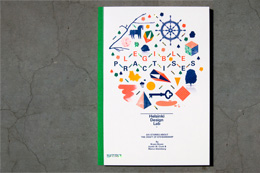 FREE BOOK about the stewardship and craft of institutional change, illustrated through the stories of six meaningful projects.